
27.07.2026
I’m having a break
If you’re anything like me, having a break is…hard. The succession of problem-solving tasks is what I like about my day-to-day work, but I’d be lying if I didn’t occasionally come back from a break with five more things to sort and think: “what was I working on gain?”
“When you get interrupted in a task, take 20 seconds to note down where you are and what your next step is going to be”. That’s something a colleague told me recently and though I was slightly sceptical, I thought to myself, “I can spare 20 seconds”. Little did I realise how helpful it would prove to be. In the recent months, I’ve found taking a step back makes me more focused on what needs to be achieved and often able to find a better solution to the problem.
I’d like to share what has made me work more efficiently in the past months and hopefully this could motivate you to try one of those things – and keep me motivated!
Make it obvious
I love a to-do list, but I’m also someone that wants to do everything, sometimes my tendency of “I could probably just sort that out too” gets the list so long that it becomes overwhelming. The key is writing down a few achievable goals and non-negotiables; things that need to be done today. Then, think a little broader, and delegate things that need to be done next week if possible so you can have a head start after the weekend. Doing so makes my day’s objective obvious and is easier to hold myself accountable in ticking all of it off.
Make it attractive
Since I do so many to-do list, I find adding some novelty helps keeping it fresh. A new notebook, or a new pen could be the solution, or what works for me is to have a new template, or new tags to get organised. For the doing of the tasks themselves, having a comfortable set up, and putting some motivational music definitely keeps me focused.
Make it easy
I find it more manageable when I analyse a task and divide it in a series of small steps, the preparation, the doing and the and the conclusion. I enjoy cooking and the process is similar to preparing a meal. The ingredients are the documents, or research about how to do something. Then, as with a nice broth, I’m constantly testing and coming back to it to make sure that the objective is still aligned. One of the hardest steps for me is when I misjudged the recipe and won’t be able to get finish on time for the guests. In the kitchen that’s not a problem, but for office tasks with multiple stakeholders, it’s important to communicate about the potential for a delay and remembering that good news can always wait whereas bad news should be said there and then.
Make it satisfying
This is key to motivation. If a task is not satisfying it is harder for me to start it. Recently we have reflected as a team about our purpose. The ‘why’ do we do this job and not just ‘what’ we deliver, or how we do it. I’m lucky to work in a field that I aspired to work in, and this makes it all the most satisfying. When I need to start, there is always a customer that I want to help or a new solution that could be useful for lots of people and that brings me the boost I need to continue with the task.
I sometimes think that all of this is a workout. I see it like climbing a mountain. Step by step, you will get to the top, but don’t forget to have a break and look behind you at the amazing view.
Written by: Armelle Huitric
Reference – The 4 titles: Make it obvious, Make it attractive, Make it easy and Make it satisfying come from “Atomic Habits” by James Clear. The details of those paragraphs is a personal view on those, but if you like to deep dive in each of them the book details them.
Latest insights
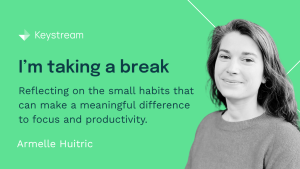
I’m having a break
If you’re anything like me, having a break is…hard. The succession of problem-solving tasks is what I like about my day-to-day work, but I’d be lying if I didn’t occasionally come back from a break with five more things to sort and think: “what was I working on gain?” “When you get interrupted in a task, take 20 seconds to…

Digital Transformation Is Building the Bridge. Who Is Helping People Cross It?
A few years ago, I tried to teach my mum how to use a smartphone. What I thought would take a few minutes turned into weeks of explaining, reassuring, and troubleshooting. Every new feature seemed intimidating, and every mistake reinforced a fear that she might “break” something. At the time, I thought I was teaching…
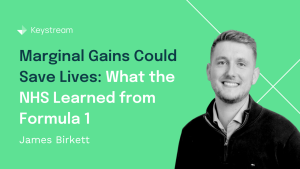
Marginal Gains Could Save Lives: What the NHS Learned from Formula 1
Across the NHS, hospitals are facing increasing pressure not only from rising patient demand, but from the growing complexity of delivering safe, efficient care within constrained operational environments. Theatre capacity, staffing shortages and delayed patient flow are all placing systems under strain, where even small inefficiencies can have significant consequences. Minutes lost during patient handovers,…

AI in Higher Education: What’s Actually Changing?
There has been a noticeable rise in conversations around AI roles across Higher Education over the past year. Universities are increasingly hiring for AI specialists, data leaders, automation experts, and digital transformation professionals. But despite the recent attention, AI itself is not new to the sector. In reality, many of the technologies and skillsets now…
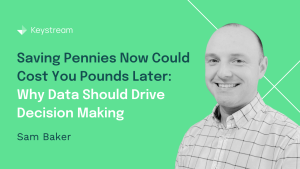
Saving Pennies Now Could Cost You Pounds Later: Why Data Should Drive Decision Making
Across the UK and internationally, ambulance, police and fire services are facing increasing pressures not only from rising demand, but from a quieter and more structural issue: vehicle availability. With c.8-10% of public sector fleets off the road at any given time, a growing proportion are ageing beyond their optimal operational life, leading to more…
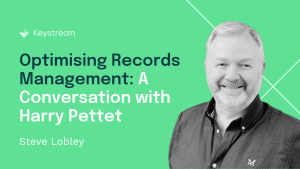
Optimising Records Management: A Conversation with Harry Pettet
Reflecting on my time at Rewired, the opportunities that can be achieved by the NHS from maximising frontline productivity (FP) are increasingly clear to me. In line with the FP programme mandate, I saw a clear shift in focus from EPR roll-out to instead a wider scope which included championing digital enablement and adoption via…
Paperless? Not Without Paper First.
Sitting at my 200-year-old desk, checking a 120-year-old pocket watch, and recapping a century-old fountain pen, while dictating this into my phone and letting AI help shape it into a blog. The irony isn’t lost on me. Just before writing this, I spoke to someone who’s spent years focused on the problem, not the solution….
From Big Pharma to the Public Sector: Why I Made the Shift
Career changes are rarely about chasing a new title. For me, the move from big pharma into the public sector was about aligning my skills with work that has a more direct impact on people’s lives. For several years, I worked in the private sector supporting global clinical trials by overseeing translations of electronic clinical…
You Can’t Merge What You Can’t Measure: Safe and Legal Day 1 Starts With Data
I remember the sinking feeling clearly. I was working from my home office when my builder knocked on the door and asked if he could have “a quick word.” That phrase never means good news. He’d discovered another asbestos pipe—hidden behind a wall we’d already opened up. The bathroom renovation was delayed again. Costs climbed….
If Your CIO Isn’t at the Executive Table, Your University Is Taking a Risk
Universities don’t fail because their technology breaks. They fail because their strategy ignores technology until it’s too late. For years, Higher Education has treated IT as a delivery function – something to be consulted once the “real” decisions have been made. That mindset is now actively dangerous. In today’s sector, digital strategy is institutional strategy. And any university that doesn’t have its CIO at the executive…